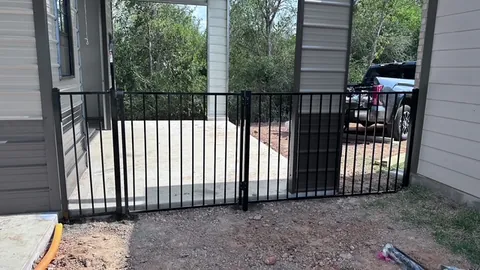
What makes a pool fence different
A regular fence is about privacy or boundaries. A pool barrier exists to keep small children and pets out of the water, and the rules reflect that. Typical concerns include how tall the barrier is, how large a gap a child could squeeze through, whether anything can be climbed and whether the gate closes and latches by itself.
The exact requirements come from the codes your city has adopted and from state law. We do not quote a number from memory here, because the details can change. Instead we confirm them with you for your property before we build. Texas also has a state-level definition of a swimming pool enclosure that affects what an HOA can prohibit, which we cover in the HOA guide.
Common pool fence styles
- Ornamental aluminum. The most common pool choice. It does not rust and lets you see the pool from the house. See aluminum and steel.
- Wood privacy. A solid fence around the pool yard, with a self-closing gate. It blocks the view in from outside, which many owners want.
- Steel, where more strength is needed.
Gates are the critical part
A pool gate that is propped open or does not latch defeats the barrier. Self-closing hinges, self-latching hardware and a latch mounted out of a young child's reach are the details to ask about. If your pool serves a community or a rental, a stricter set of rules may apply; see commercial and HOA amenity fencing.
One point that confuses people: Texas Health and Safety Code Chapter 757 applies only to a pool owned, controlled or maintained by the owner of a multiunit rental complex or by a property owners' association. A pool at a single-family home falls under other rules, such as your city's pool barrier requirements, which we confirm with you before we build.
Timing and price
Pool fences usually take one to three days once scheduled. Typical installed prices: aluminum or steel at $35 to $60 per linear foot and wood at $24 to $44, plus gates, as of September 2026. Prices vary by site, especially when the fence must go around decking, equipment or a slope. See the cost guide.
Permits and HOAs
A permit may be required to install a new fence or to change a fence's dimensions. Sugar Land calls it a “Building – Fence” permit, and the city takes applications online through its Citizen Self Service portal. Replacing a fence like for like, without changing its dimensions, may not need one. 76 Fence can help with permitting. If your pool is being built or you are adding a barrier to an existing one, ask the city what it requires for a pool project. Not sure whether you need a permit? We can help you find out. Your HOA may also need to approve the fence. If your HOA guidelines are unclear, check with us and we will get a definitive answer from your HOA.
Planning around equipment
Pool pumps and heaters need airflow and service access. If you want them hidden, a horizontal screen can enclose them without blocking the barrier. Tell us where the equipment sits when you call (281) 769-2116.
Questions people ask
How long does a pool fence take?
Pool fences usually take one to three days once scheduled.
What type of fence is best for a pool?
Ornamental aluminum is the most common choice because it does not rust and lets you see the pool. A solid fence with a self-closing gate also works.
Do I need a permit for a pool fence?
A permit may be required. Not sure whether you need a permit? We can help you find out.
Where this information comes from, and what to double check
This page draws on 1 official source, such as statutes, city pages or association documents and 1 summary or third-party page, all listed under Sources below. Last checked November 18, 2026. Statutes, city codes and association rules change, and a summary can miss details that apply to your lot. Please read the sources yourself and confirm with your HOA, the City of Sugar Land and, for legal questions, a Texas attorney. We build fences and are not lawyers, so this page is general information, not legal advice. Want to talk it through? Call or text (281) 769-2116 and we will go over it with you.
Last checked: November 18, 2026. General information, not legal advice. Confirm current requirements with the authority that regulates you.